
Rehabilitation of the Tartus Port to Talkalkh Rail Line
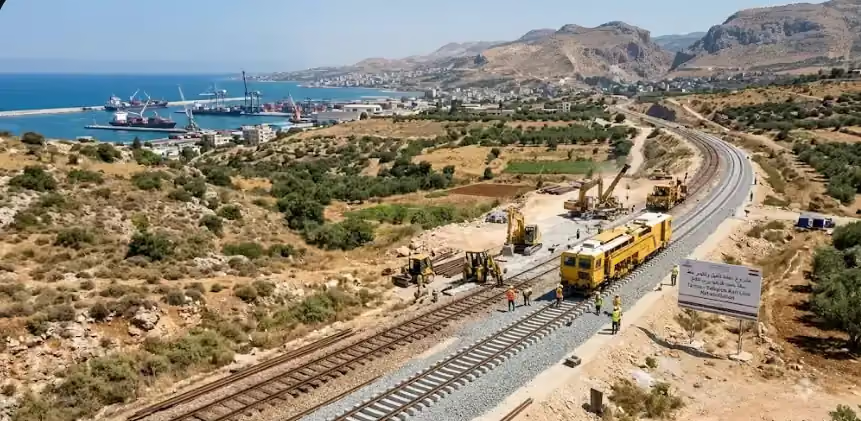
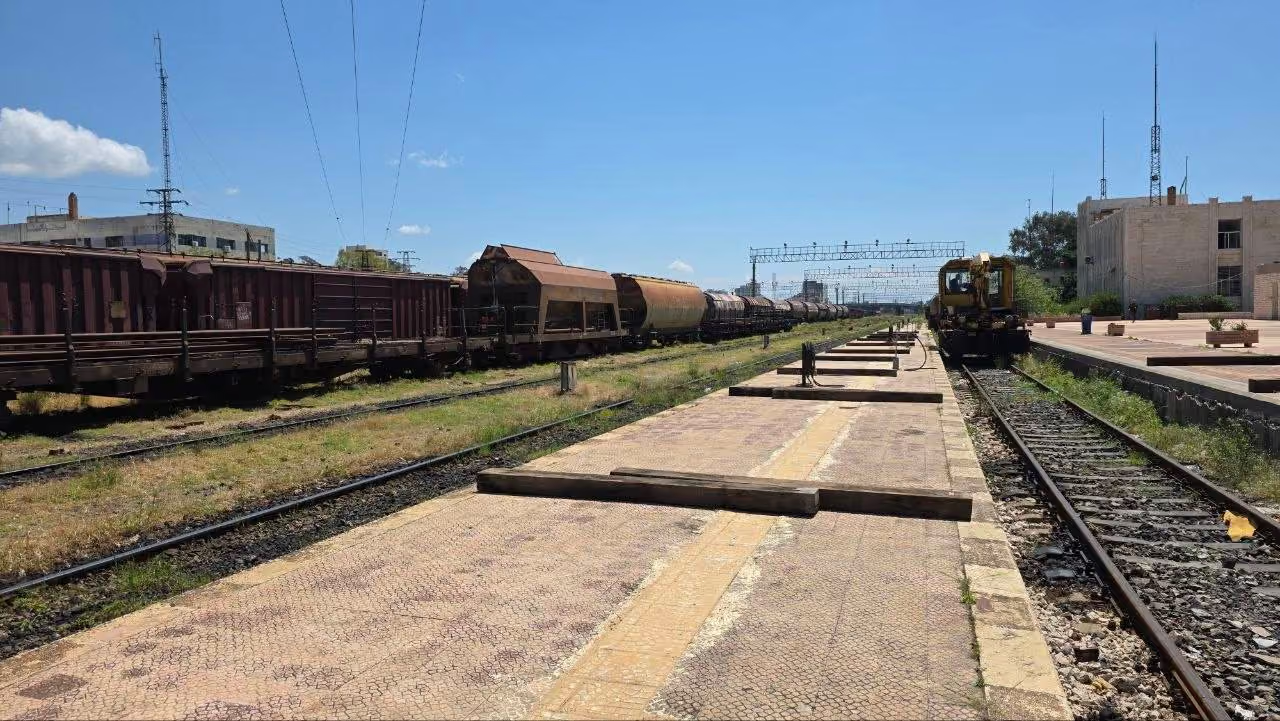
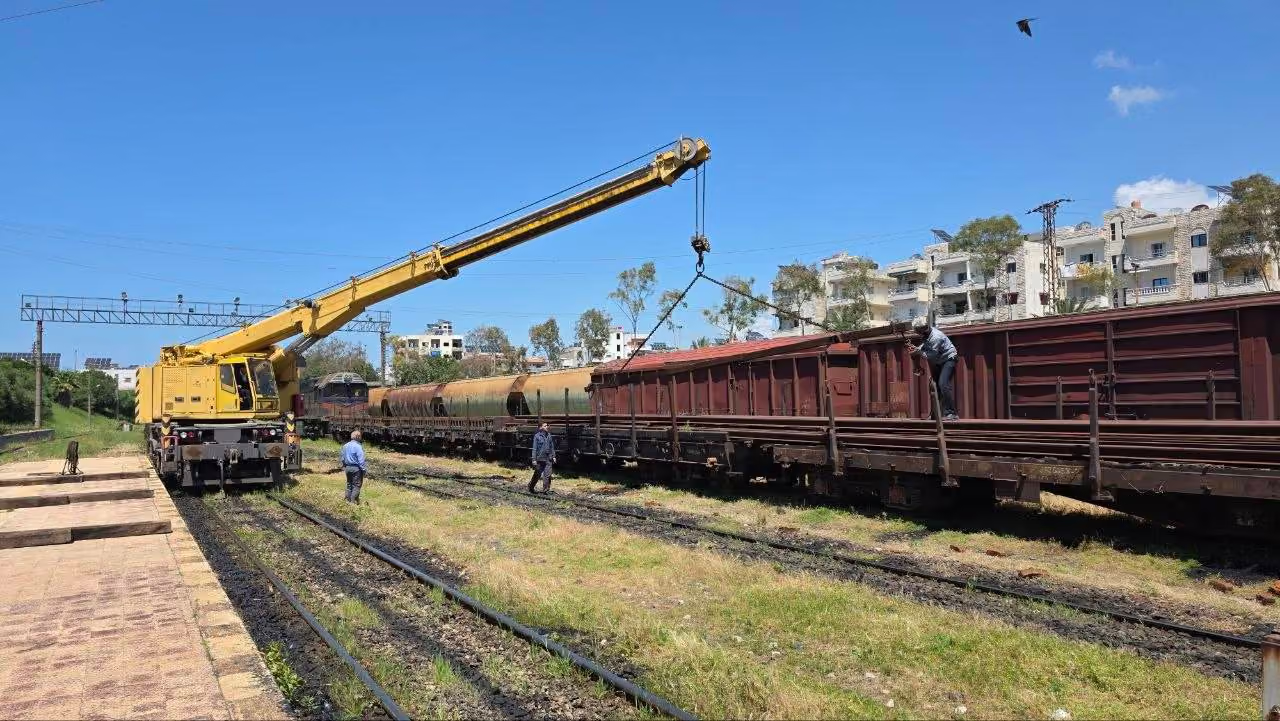
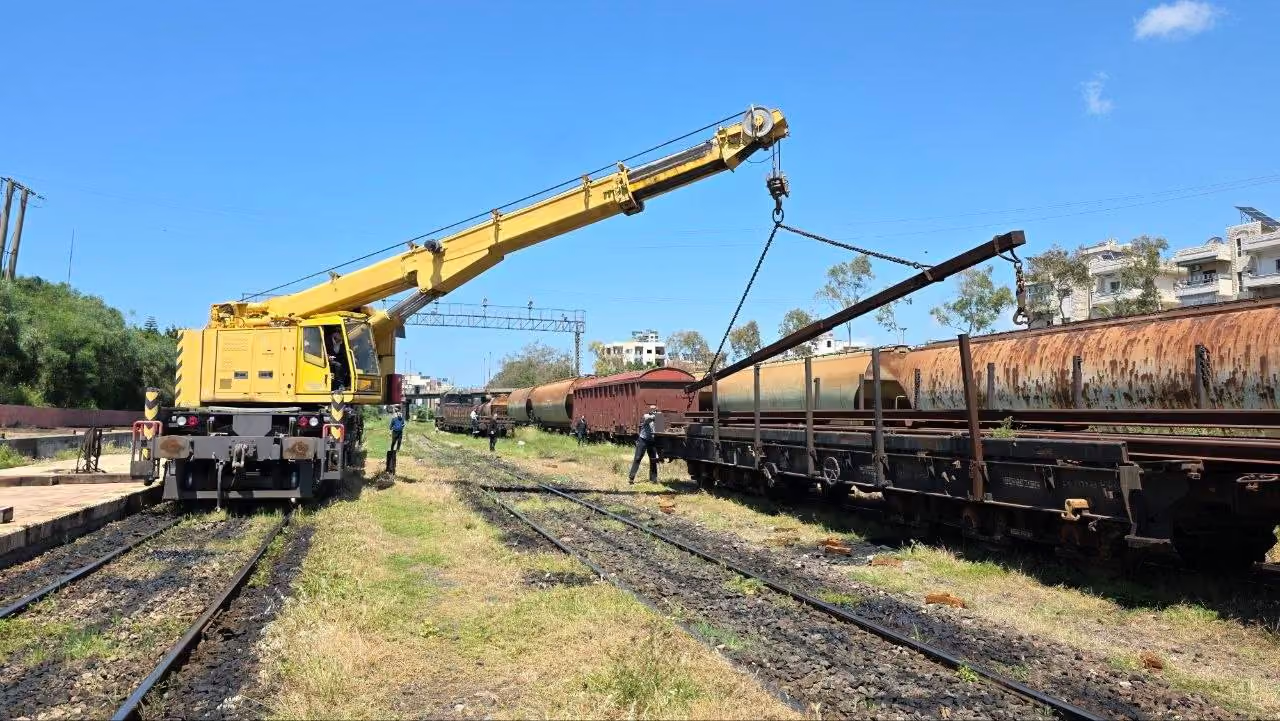
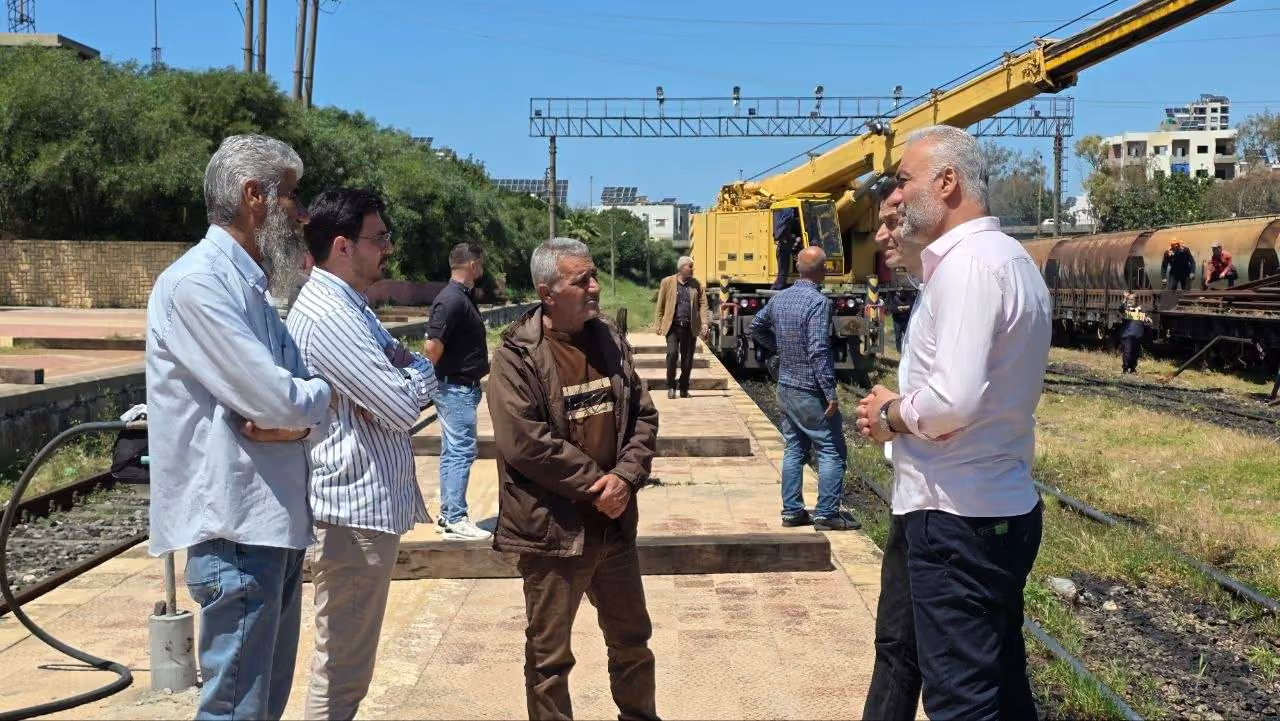




The railway line between Tartus port and Talkalkh station in the western Homs countryside is a freight line that links the port on the Syrian coast with the interior. The Tartus branch of the Syrian General Railway Corporation began rehabilitating it in April 2026 to raise its operating efficiency and improve safety, in support of the movement of goods between the port and the inland governorates.
Scope of the Works
The Tartus Governorate announced the works in an official statement, and crews of the Tartus branch took them on. The line runs from Tartus port through Tartus and Al-Akkari stations to Talkalkh station; in its report of 24 April 2026, SANA also named Samrian station on the route. According to Eng. Nidal Abdulqader, deputy director of the Tartus branch, speaking to SANA, the works include replacing worn rails and sleepers, maintaining the upper section of the line and servicing the switches at the stations. SANA reported on 24 April 2026 that the work began with a field survey in which the crew walked the whole route to identify weak points. The head of the branch's lines division told SANA on 29 April 2026 that the work on the upper and lower sections of the line, including replacing worn timber sleepers at station entrances and exits, would take three months and was being carried out with the simplest means available to the branch. In parallel, according to SANA on 11 September 2026, the branch was also maintaining the Tartus–Baniyas axis and the lines running from Baniyas station toward the Baniyas refinery.
The official statements published so far do not state a project cost. Abdulqader told Syria 24 (reported on 1 August 2026) that no financial cost had been allocated to the project and that the Corporation received no external funding; the work relied on local expertise under the supervision of the branch administration, and materials that ran short were brought in from other branches. He added that the branch re-hired temporary workers who had worked there before to make up a shortage of technical labour, and that years without maintenance had left the track and its timber and concrete sleepers badly worn.
Timeline
- 23–24 April 2026, works announced. Syria TV reported the Tartus Governorate's statement on 23 April, and SANA reported the start of the work on 24 April. The branch gave a three-month schedule on 29 April.
- 22 May 2026, first phase completed. SANA reported that the branch had completed the first phase of maintenance and rehabilitation of the line between Tartus port and Talkalkh station, which passes through Tartus and Al-Akkari stations, and had started the second phase. No completion date was announced for the second phase.
- End of July 2026, second phase completed. Abdulqader told Syria 24 (reported on 1 August 2026) that the second phase, which covered the link between Tartus station and the port, ended at the end of July, and that the third and final phase was due to be completed by mid-September.
- 11 September 2026, final phase under way. Abdulqader told SANA that about 80 percent of the planned work was complete and that the final phase was expected to finish by the end of September 2026.
- 21 September 2026, Homs–Tartus axis figure. Al-Thawra, citing Syrian General Railway Corporation data, reported that maintenance on the Homs–Tartus axis had reached 85 percent.
Intended Use After Completion
Tartus port receives vessels, particularly those carrying wheat, whose cargo is then moved by rail to the governorates. The Corporation announced on 11 April 2026 that it was starting to move by rail, from Tartus port, about 40,000 tonnes of wheat carried by the vessel Inisia to the Shinshar silos in Homs and the Nasiriyah silos in Damascus. The branch also plans to move phosphate from the eastern mines toward the port via the Homs–Talkalkh line, and on 24 April 2026 Abdulqader pointed to an orientation, in the coming period, toward moving strategic materials such as phosphate and gas. Separately, Enab Baladi reported on 5 April 2026, citing a Ministry of Transport post, that technical teams of the Tartus branch had begun rehabilitating gas-transport lines to return them to service in the coming stage, with checks on the tanks, brakes and loading and unloading valves. Once the rehabilitation is complete, SANA reported on 11 September 2026, the line will be able to carry petroleum products, grain, containers, phosphate, cement, aggregates and other goods. Abdulqader said completion would allow higher operating speeds and larger loads per trip, and that moving goods by rail between the port and the interior would help reduce transport and fuel costs and ease the pressure on roads.
Frequently Asked Questions
What railway line is being rehabilitated?
The line between Tartus port and Talkalkh station in the western Homs countryside, passing through Tartus and Al-Akkari stations.
Which entity is carrying out the works?
The Tartus branch of the Syrian General Railway Corporation, using local expertise, according to the branch's deputy director.
What do the rehabilitation works include?
Replacing worn rails and sleepers, maintaining the upper section of the line and maintaining the switches at the stations.
What goods can the line carry?
The port receives vessels carrying wheat, and phosphate is planned to move toward the port via the line. After the rehabilitation, the line can carry petroleum products, grain, containers, phosphate, cement, aggregates and other goods.
What is the latest documented status of the project?
As of September 2026, the final phase was under way. SANA reported on 11 September 2026 that about 80 percent of the planned work was complete, with completion expected by the end of September 2026. Al-Thawra reported on 21 September 2026 that the Corporation put maintenance on the Homs–Tartus axis at 85 percent.
Update — 2026-05-22
According to the Syrian Arab News Agency (SANA) on 22 May 2026, the Tartus branch of the Syrian General Railway Corporation completed the first phase of maintenance and rehabilitation on the line linking Tartus port to Talkalkh station via Tartus and Akkari stations, and began the second phase. SANA quoted the branch's deputy director, Nidal Abdulqader, as saying the works help raise transport efficiency, increase operating speeds and improve safety levels. No completion date was announced for the second phase.
At network level rather than on this line specifically, Arab News reported on 14 August 2026, citing Syrian railway data, that rail freight rose by nearly 59 percent in the first seven months of 2026 to 663,479 tonnes through July, against 417,859 tonnes in the same period of 2025, and that fuel-oil trains resumed running at 60 km/h while phosphate and grain trains run at 80 km/h following repairs.
Update — 2026-09-11
SANA reported, quoting the deputy director of the Syrian General Railway Corporation's Tartus branch, that the ongoing works in the final phase include maintenance of the upper section of the line, replacement of worn rails and sleepers, and maintenance of the switches at the stations. The completed work so far amounts to approximately 80 percent of the planned work, with the final phase expected to be completed by the end of September 2026. He added that completion of the rehabilitation will enable an increase in operating speed and an increase in the volume of cargo transported per trip.
UPDATE 21.09.2026
Second phase completed; final phase under way (SANA, 11 September). The deputy director of the Tartus branch, Nidal Abdulqader, told Syria 24 (reported on 1 August 2026) that the second phase, covering the link between Tartus station and the port, ended at the end of July 2026 and that the third and final phase was due to finish by mid-September. He described the Tartus station–port link as the only connection between the port and the rail network, and said the work was done with local expertise, with no financial allocation and no external funding. On 11 September 2026 SANA quoted him as saying that about 80 percent of the planned work was complete, with the final phase expected to finish by the end of September.
Maintenance on the Homs–Tartus axis at 85 percent. On 21 September 2026 Al-Thawra, citing Syrian General Railway Corporation data, put the implementation rate of maintenance on the Homs–Tartus axis at 85 percent and said the essential works affecting train safety were done. Following those data, the article reports the replacement of 591 concrete sleepers and 283 timber sleepers in switches, and says maintenance crews replaced 59 rails in curves. The director of the Homs branch told Al-Thawra that the branch had finished the works affecting train safety on its section, which the article puts at the western line from kilometre 0 to kilometre 50, and had moved to a stage aimed at improving track quality. The Corporation listed shortages of equipment, including cranes, and of workers on the Homs–Talkalkh section. The 85 percent figure refers to the Homs–Tartus axis as a whole, a wider scope than the Tartus branch's section.
Gallery :
Enab Baladi, Tartus.. preparations to resume gas transport via railways, 5 April 2026
Enab Baladi, Start of rehabilitating the rail line between Tartus port and Talkalkh, 23 April 2026
Syria TV, Syrian Railways begins rehabilitating the Tartus port – Talkalkh line, 23 April 2026
SANA, First phase of the Tartus – Talkalkh rail line rehabilitation completed, 22 May 2026
Arab News (SANA), Syria's rail freight surges 59% as repairs restore key routes, 14 August 2026