
.avif)
Find & Read
No items found.



.svg)
Bio
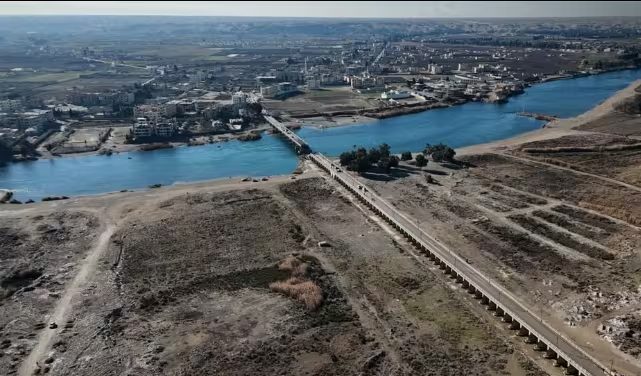
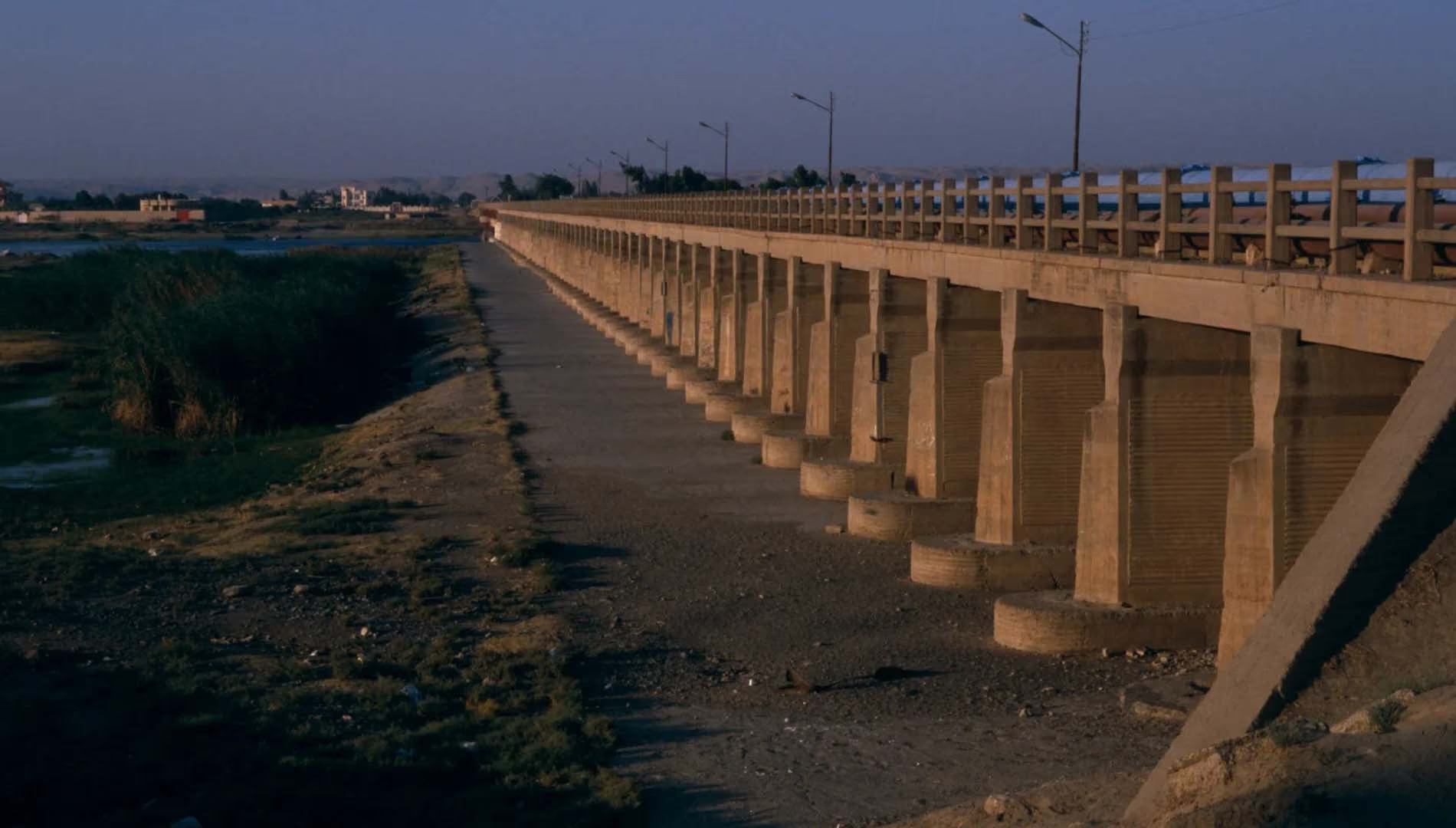
The Old Bridge over the Euphrates carries the crossing between the two banks of the river at Ar-Raqqa city in eastern Syria, linking the urban core on the northern bank with the southern bank and the roads running towards Tabqa and the districts south of the river. The UN Office for the Coordination of Humanitarian Affairs described this route in February 2026 as "a bridge connecting Ar-Raqqa city with Tabqa and southern areas". Ar-Raqqa city is the administrative, commercial and agricultural centre of the middle Euphrates basin: REACH and UNOSAT estimated its population at around 300,000 in late 2016, and placed post-return estimates between 150,000 and 330,000 people spread across 23 neighbourhoods (2021).
What distinguishes the crossing is that it is more than a road. It is the hinge between the city on the north bank and the irrigated cotton and wheat land that runs south and west along the river towards the Tabqa dam. Farm produce moving to market, goods reaching the city's commercial centre, and daily travel to schools, clinics and workplaces all funnel across the river at this point, which makes the working condition of the crossing an economic variable for the whole of the middle Euphrates rather than a purely local one.
Damages
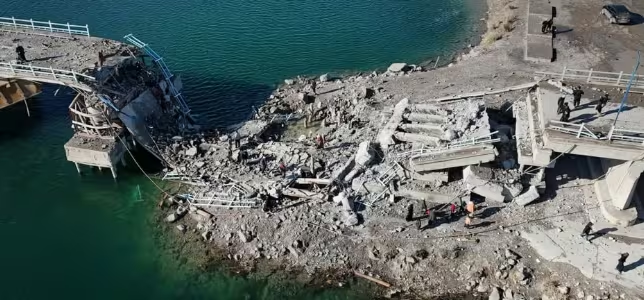
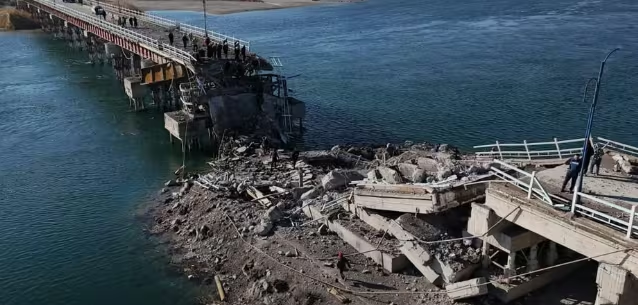
No institutional assessment published to date measures the condition of this crossing on its own; the documented figures cover the city and the governorate around it. Working from six satellite images taken between 2013 and 2021, REACH and UNOSAT recorded 12,707 damaged structures in Ar-Raqqa city by October 2017 against 1,667 in February 2017. By April 2021 the same assessment still detected 4,362 damaged or destroyed structures — 32 per cent of those surveyed — together with 1,948 demolished or cleared structures (15 per cent), across the city's 23 neighbourhoods (REACH · UNOSAT, 2021).
River conditions add a second layer. In late May and early June 2026, flooding along the Euphrates displaced at least 1,000 households in Ar-Raqqa — an estimated 6,000 people — affected more than 3,000 members of host communities, disrupted irrigation networks and rendered inoperable water pumping stations serving the city. UNFPA recorded that damage to bridges and river crossings "partially isolated communities along the riverbanks", and reported approximately 27,084 people affected across Ar-Raqqa and Deir-ez-Zor governorates combined (UNFPA, 2026).
Recovery is documented and measurable. The REACH and UNOSAT assessment found 7,104 structures — 53 per cent of those surveyed — reconstructed or rehabilitated in Ar-Raqqa city between 2017 and 2021 (2021). The World Bank's physical damage and reconstruction assessment for 2011–2024 puts the share of damaged asset value already reconstructed in Ar-Raqqa governorate at about 37.5 per cent as of 31 December 2024, the highest share of any governorate, and cites REACH figures of 5,082 buildings reconstructed and 3,109 repaired in the city as of 24 July 2023 (World Bank, 2025). On the crossings themselves, OCHA reported on 3 February 2026 that damaged infrastructure in Ar-Raqqa governorate was starting to be repaired, "including temporary rehabilitation of a bridge connecting Ar-Raqqa city with Tabqa and southern areas".
.svg)

.png)


