
.avif)
Find & Read
No items found.



.svg)
Bio
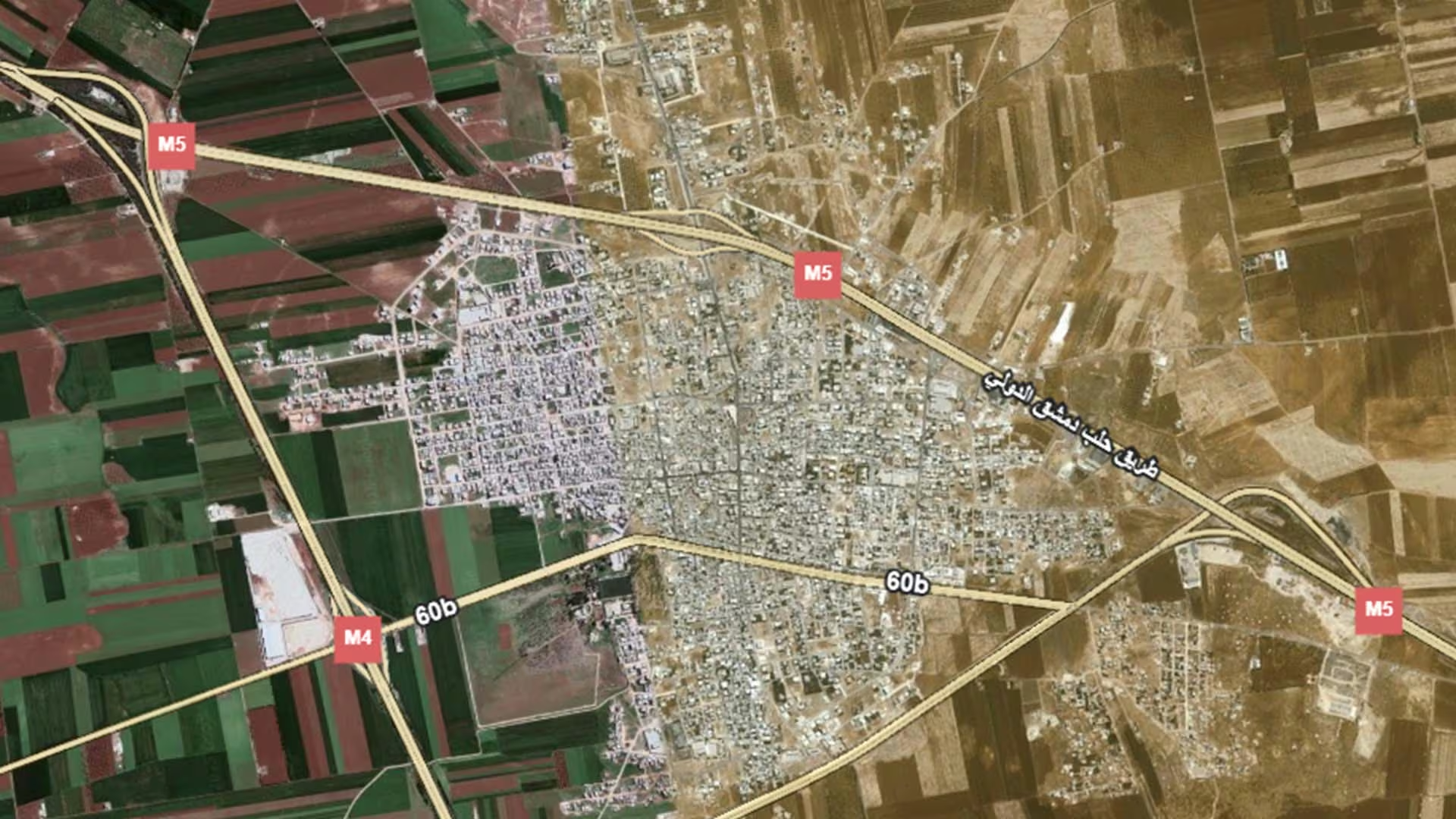
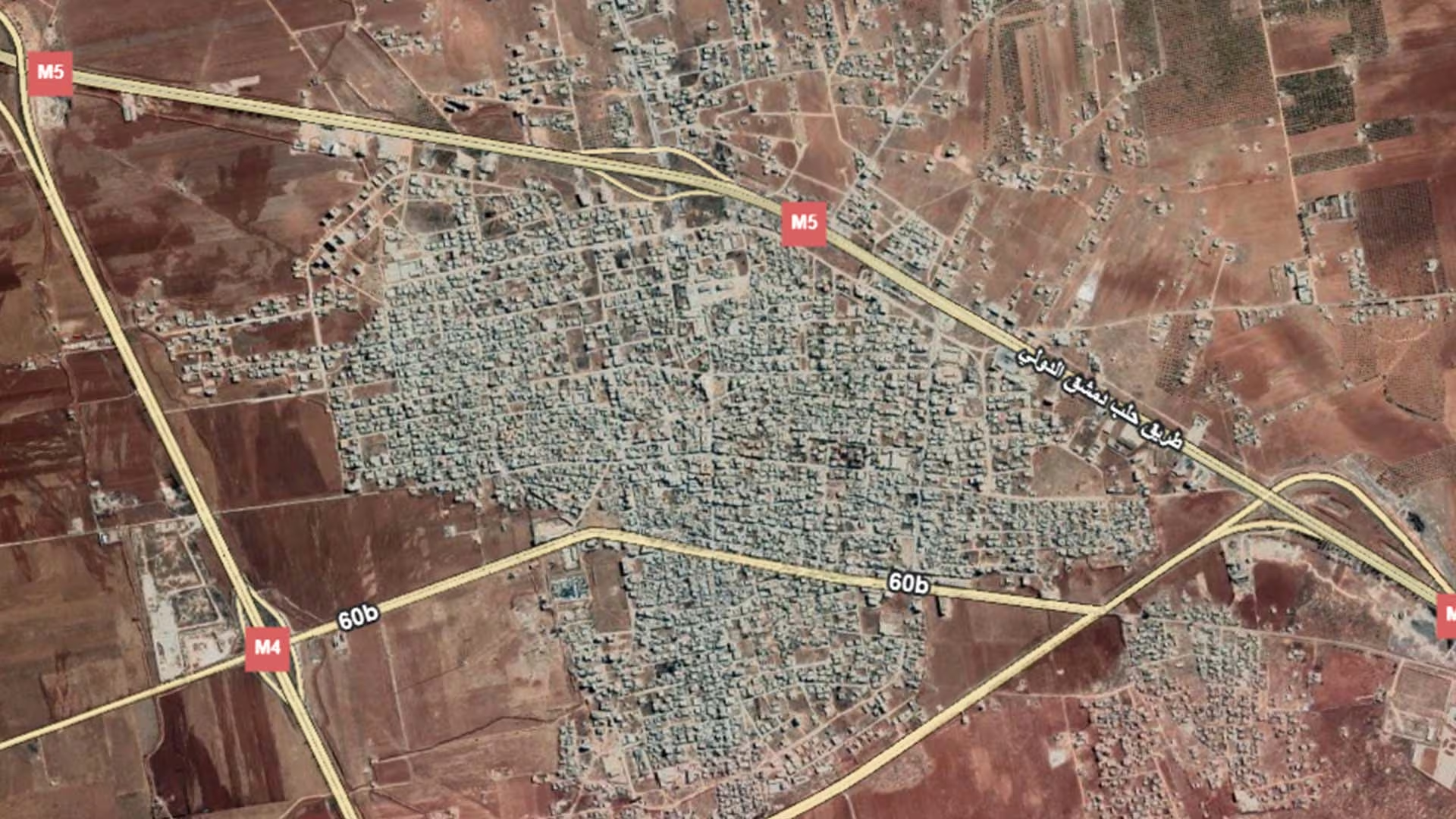
Saraqib sits in the eastern part of Idlib Governorate, at the point where Syria's two principal motorways meet: the M4, which runs east to west between the coast and the interior, and the M5, which runs north to south between Aleppo and Damascus. That junction has long defined the town's function as a transit and trading stop on the routes linking Aleppo, Latakia and the capital, and it serves as the administrative centre of its own sub-district. The Syria Population and Housing Census of 2004, published by the Central Bureau of Statistics, recorded 86,075 people living in Saraqib sub-district.
The town is a market centre for an agricultural hinterland on the Idlib plain, where olive groves and cereal cultivation dominate the surrounding countryside, and its road position gives it a haulage and wholesale trade role out of proportion to its size. The same 2004 census counted 12,469 housing units across the sub-district, a housing stock built around a compact urban core with farming villages spread out around it.
Damages
The published institutional record on Saraqib is thin at the level of the city itself. No satellite-based damage assessment covering Saraqib as a single urban unit appears among the products published by UNOSAT, nor in the datasets carried on the Humanitarian Data Exchange, at the time of writing; the assessments available for Idlib Governorate cover Idlib city and other localities, and their figures cannot be read across to Saraqib. This article therefore carries no building-damage count for the city, because none has been published by an institutional source.
What is documented is the condition of the water infrastructure serving the town. In a press release dated 30 July 2026, the United Nations Development Programme describes Saraqib, alongside Khan Sheikhoun and Maarrat al-Numan, as among the earthquake-affected areas of Idlib Governorate whose drinking-water networks, wells and pumping stations require rehabilitation.
Recovery work in that sector is now under contract. On 30 July 2026 UNDP and the International Islamic Charity Organization signed a US$1 million partnership agreement covering a twelve-month programme under which UNDP will rehabilitate approximately 20 kilometres of drinking-water networks and equip three wells and pumping stations with solar-powered systems, restoring access to safe drinking water for nearly 79,000 people across Khan Sheikhoun, Saraqib and Maarrat al-Numan combined — the figure covers all three cities, not Saraqib alone. The same programme is to develop the operating and maintenance capacities of 14 local water authorities. As announced, this is work commissioned and beginning, not work completed.
.svg)

.png)


