
.avif)
Find & Read
No items found.



.svg)
Bio
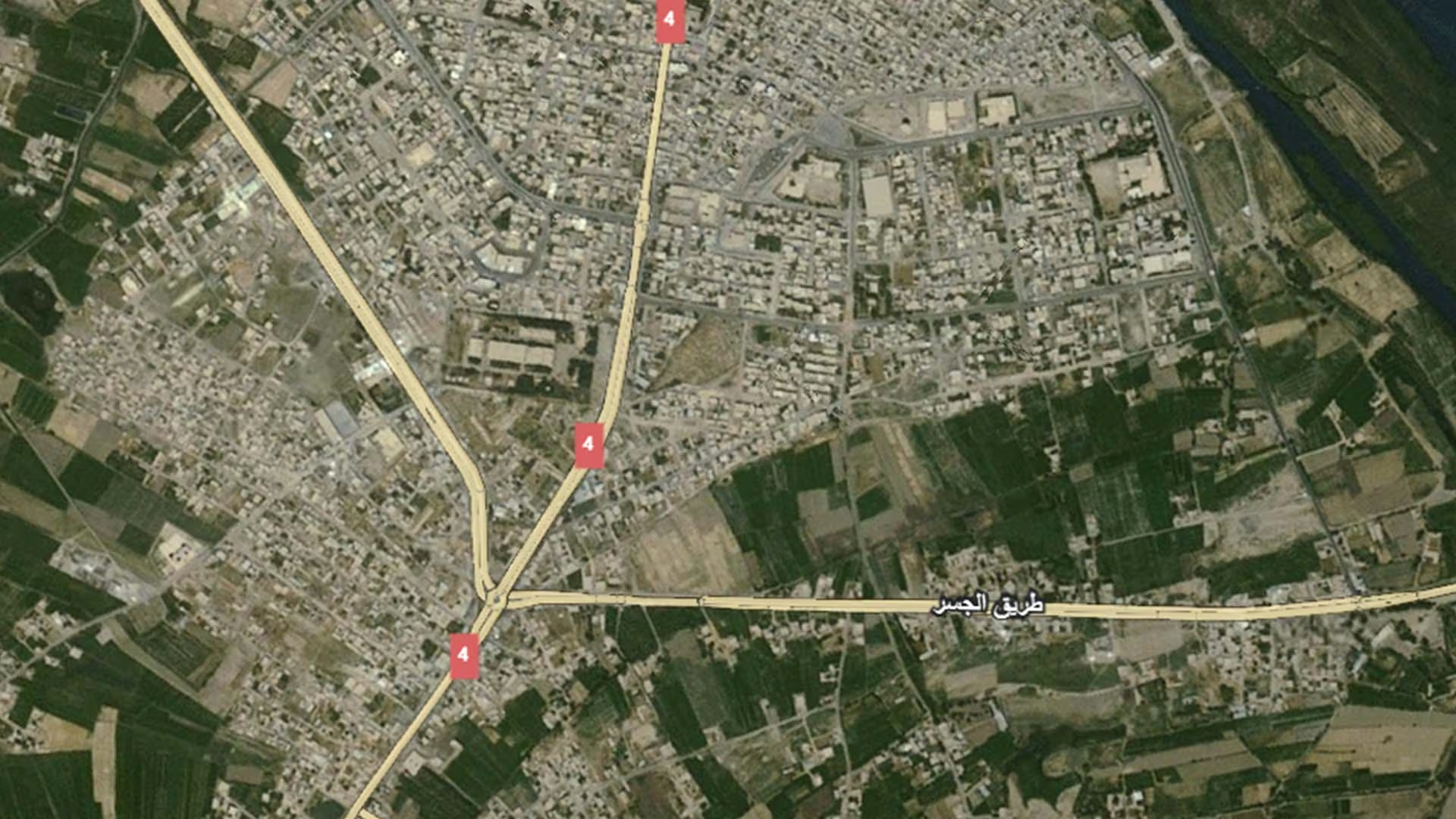
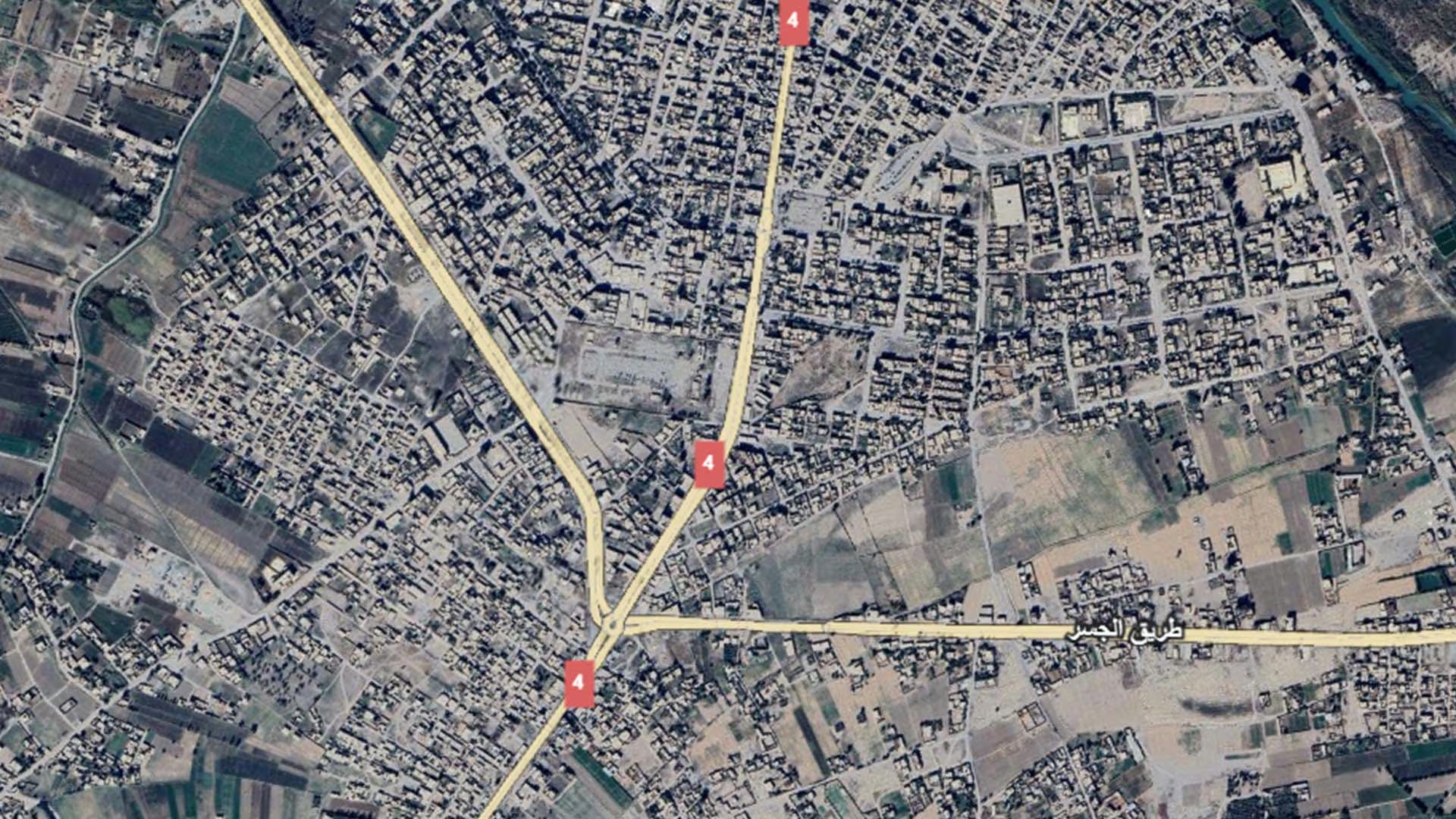
Al-Mayadin sits on the Euphrates in the south-eastern part of Deir ez-Zor Governorate, where it is the seat of Mayadin District and the administrative and service centre for the farming villages around it. UNDP recorded the district as home to 106,010 people as of August 2020.
Its economy rests on the river. OCHA's Deir-ez-Zor Governorate Profile of June 2026 describes the governorate as Syria's second-largest by area and a strategic corridor linking the north-east with Iraq and regional trade routes, with the Euphrates remaining a critical source of water for domestic use, agriculture and livestock production. Around Al-Mayadin that translates into irrigated cropping, vegetable growing and agro-processing, the activities on which UN agencies have concentrated their support to the town.
Damages
Figures measured for Al-Mayadin on its own are scarce. In May 2021 UNDP reported that the area and its surroundings had suffered damage to local infrastructure and basic services alongside large-scale displacement, and that UN estimates put 62,057 people in Mayadin in need of humanitarian support. At governorate level, OCHA's Deir-ez-Zor Governorate Profile of June 2026 records extensive damage to housing, infrastructure, health facilities, schools, irrigation systems and water networks, with return movements rising since late 2024 and adding further pressure on already strained services.
The most precisely measured recent shock is environmental. A satellite-based assessment issued by WFP in June 2026 found that in late May 2026 the Euphrates expanded to roughly three times its normal extent, from 60.9 km² to 188.7 km², inundating 7,210 hectares of agricultural land — 8.2 per cent of all cultivated land in Deir-ez-Zor Governorate — at the height of the wheat harvest. WFP named the Basira–Al Mayadin stretch among the most severely affected areas, with flooding observed along both banks of the river.
Recovery work in the town is documented. In May 2021 the Government of Italy and UNDP, together with FAO and UNFPA, committed €3 million in resilience and early-recovery support for Mayadin, built around the Rural Development Centre in the city. As set out at signature, the programme aimed to benefit 80,000 local residents directly and indirectly, among them 33,600 returnees, 20,000 women of reproductive age and 800 persons with disabilities, through income-generating activities, agriculture and agro-processing, and reproductive-health services.
.svg)

.png)


