
.avif)
Find & Read
No items found.





.svg)
Bio
Kafr Nbouda (Kafr Nabudah) is a town in the northern countryside of Hama Governorate, in Al-Suqaylabiyah District and the Qalaat al-Madiq subdistrict. It sits on the open plains that run between the city of Hama and the southern edge of Idlib Governorate, on the road links that tie the two governorates together. Its economy has always rested on the land around it — field crops, orchards and livestock — rather than on industry. No recent institutional population estimate for the town has been published, so this profile deliberately carries no population figure.
What defines Kafr Nbouda is farming, and the wider picture confirms how much weight that carries locally. In its April 2026 Communities of Return Index for Hama Governorate, the International Organization for Migration's Displacement Tracking Matrix recorded agriculture and livestock as the leading primary livelihood sector across the governorate, reported by 42 per cent of assessed communities. For a town of this kind, the state of the surrounding farmland, the irrigation that serves it and the roads that move its produce are the practical measures of recovery.
Damages
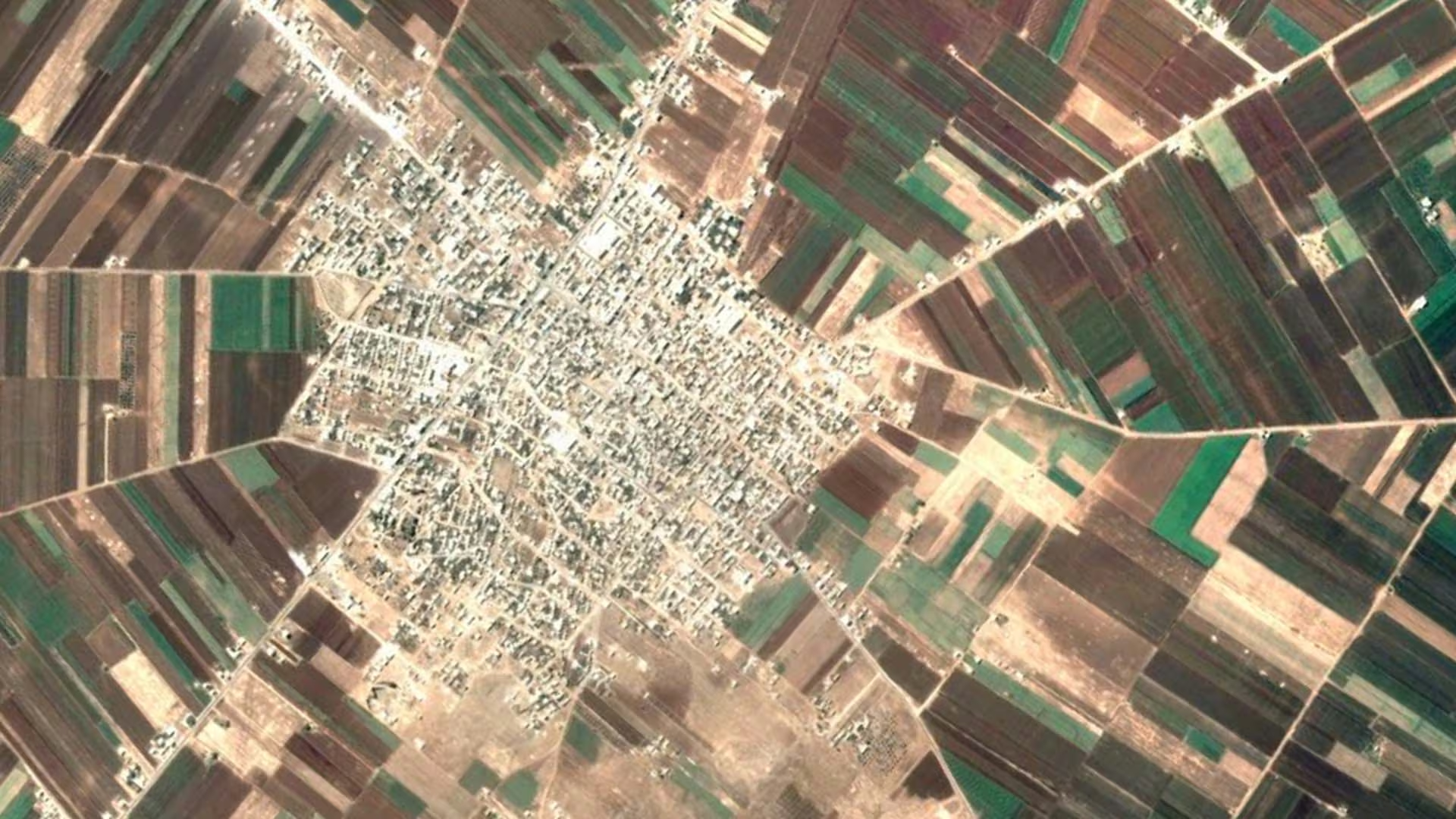
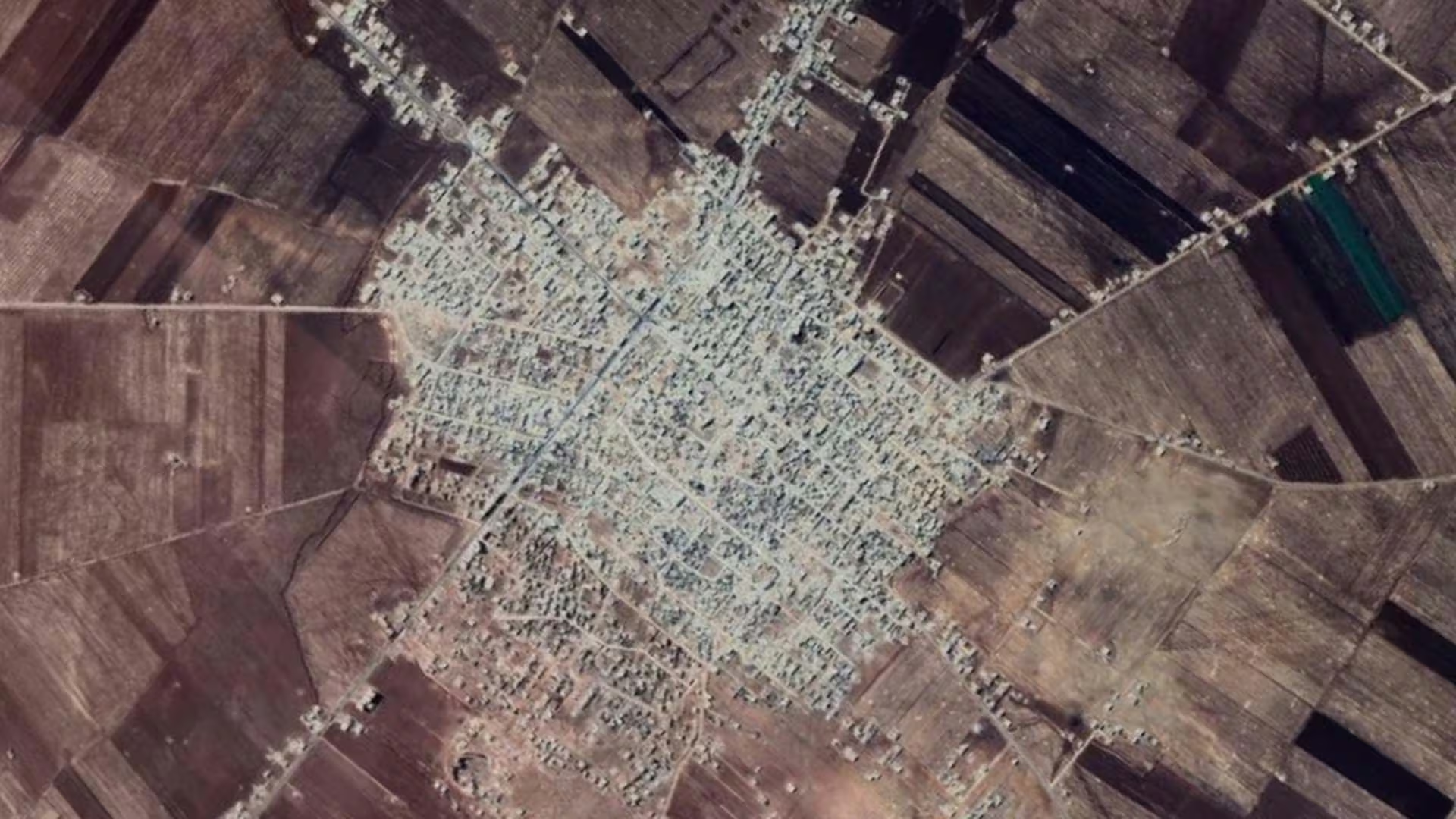
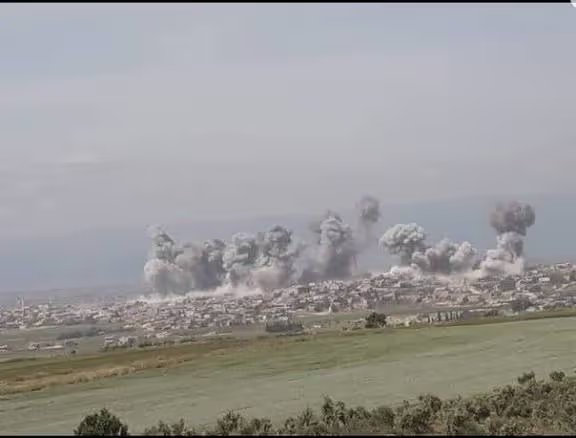
No satellite-based damage assessment covering Kafr Nbouda specifically has been published, and no institutional source gives a count of damaged or destroyed buildings in the town. The documented picture available today is at governorate and district level. The International Organization for Migration's Communities of Return Index for Hama Governorate (April 2026, Round 5) reports that 61 per cent of assessed communities across the governorate reported severe damage to shelters, and scores overall return conditions in Hama at 3.2 out of 5 — the band the assessment labels "partially conducive" — alongside an estimated 432,800 returnees in the governorate.
Service conditions in the district Kafr Nbouda belongs to are the tightest in Hama. The same April 2026 assessment measured average availability of public electricity over the preceding 30 days at six hours per day in Al-Suqaylabiyah District, the lowest of the governorate's five districts and well below the fifteen hours recorded in Masyaf. The farming base is likewise not yet back at capacity: 83 per cent of agriculture-reliant communities in Hama reported to the same assessment that the sector is not fully functioning. Asked what most hinders return and reintegration, communities in the governorate named the cost of living (33 per cent), a shortage of humanitarian or development support (22 per cent), poor infrastructure or living conditions (17 per cent), a lack of livelihood opportunities (17 per cent) and inadequate housing or shelter (11 per cent).
Return to the town itself is documented and under way. On 29 July 2026 a convoy carrying 94 displaced families left camps in Idlib Governorate for their hometown of Kafr Nabudah under a voluntary return programme organised by Idlib Governorate and the Directorate of Social Affairs and Labour with UNHCR, Muzun for Humanitarian and Development Organization, the Syrian Arab Red Crescent and the Directorate of Emergency and Disaster Management, which arranged transport for the families and their belongings along with non-food relief items. The intention to remain is strong: 96 per cent of assessed communities in Hama told the April 2026 index that most returnees would stay. For scale, the World Bank's October 2025 assessment put Syria's national post-conflict reconstruction cost at a best estimate of 216 billion US dollars, with infrastructure accounting for 48 per cent of total recorded damage — the category that most directly shapes what a farming town like Kafr Nbouda needs next.
.svg)

.png)


