.avif)
Find & Read
No items found.

.svg)
Bio
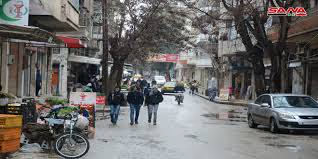
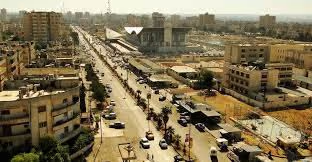
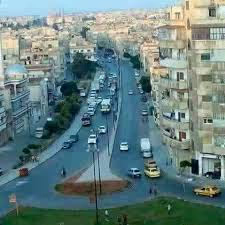
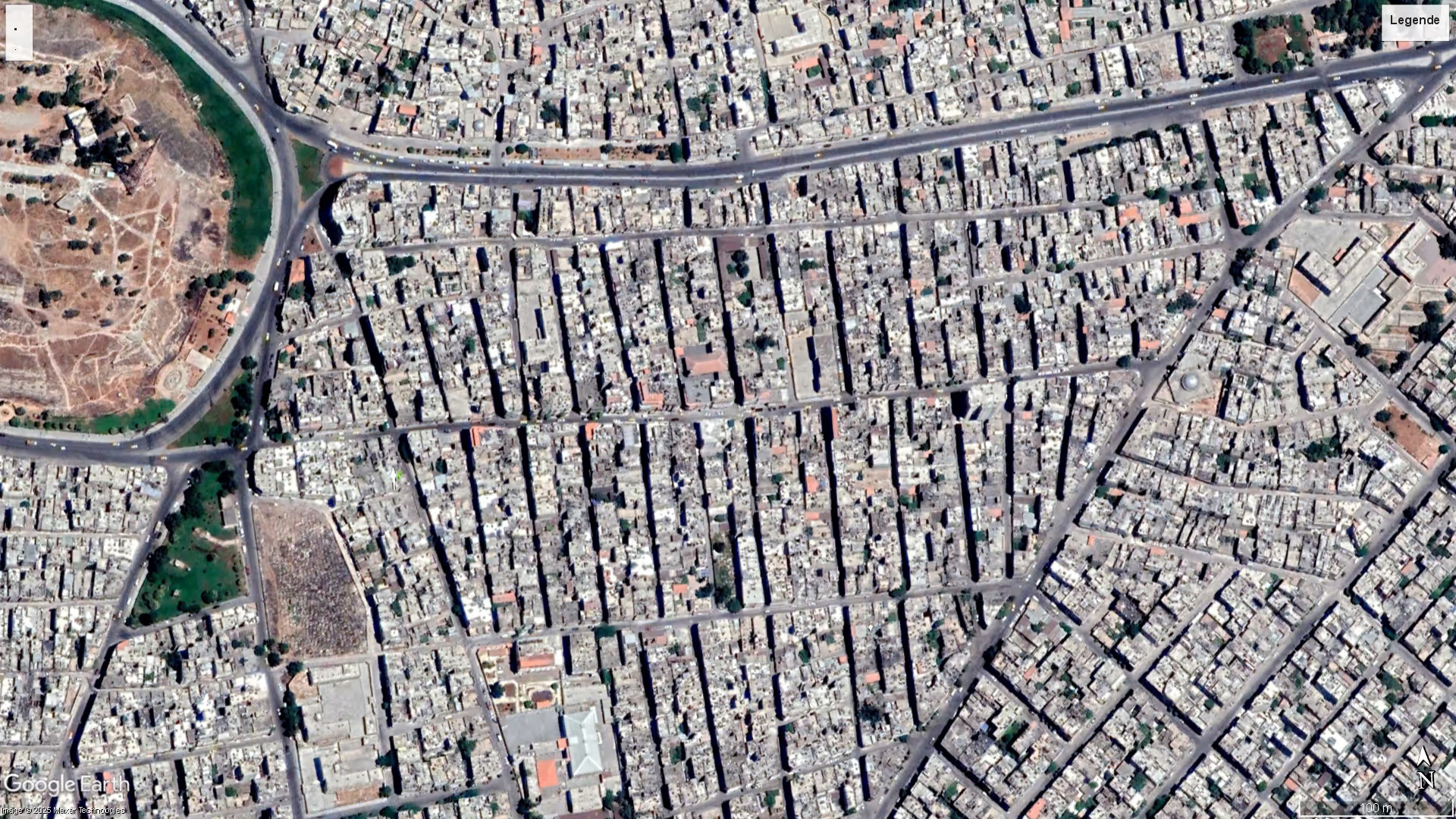
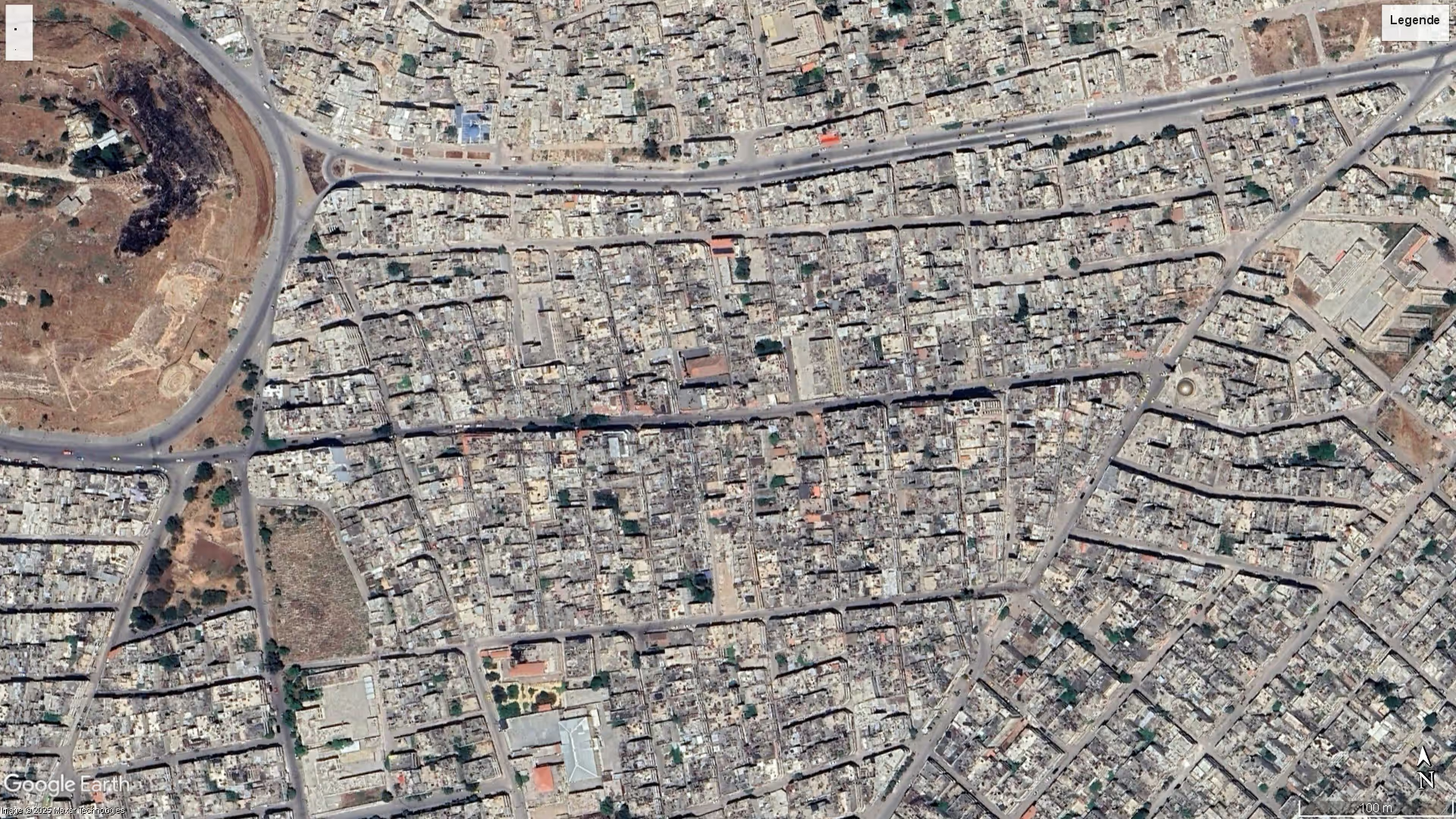
Bab al-Siba'a is one of the nine neighbourhoods that make up the Old City of Homs, at the heart of Syria's third-largest city and of a governorate lying on the country's main north–south and coast–interior crossroads. UN-Habitat's neighbourhood profile of the Old City of Homs (2014) records a population of 11,200 for Bab al-Siba'a in 2010, set in a low-rise fabric of buildings of two to four storeys. The same profile puts the pre-crisis population of the Old City together with its three adjacent neighbourhoods at 156,000, drawing on the 2004 census of the Syrian Central Bureau of Statistics.
The neighbourhood falls inside the Old City heritage boundary defined by the Department of Tourism, and its souk is listed among the fourteen essential markets of the Old City in that same UN-Habitat profile (2014). Its commercial role reached far beyond its own streets: UN-Habitat recorded in 2014 that more than 70 per cent of Homs's specialised professionals and business owners — retailers and souk owners, engineers, doctors and pharmacists among them — worked in the Old City and its markets, which together formed the commercial and professional hub of the governorate.
Damages
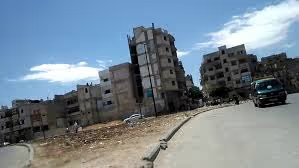
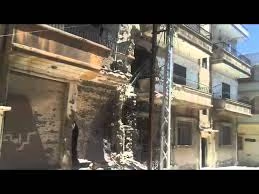
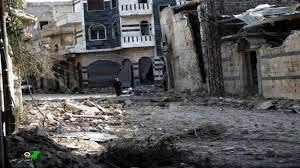
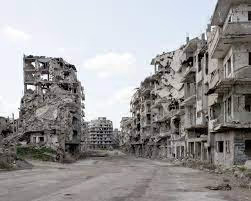
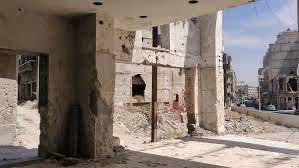
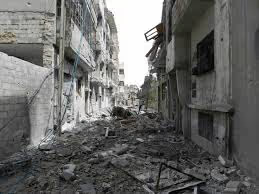
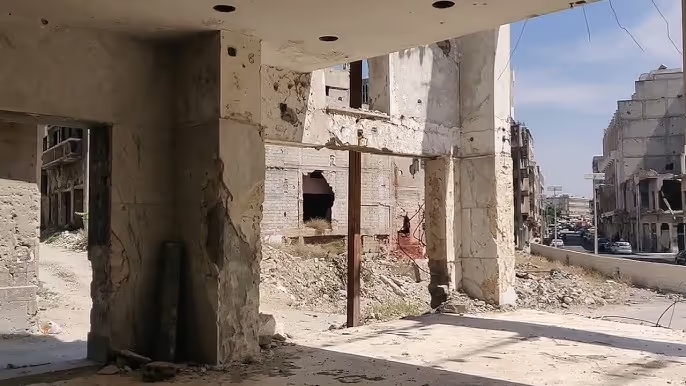
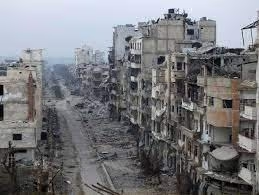
The World Bank's Joint Damage Assessment of Selected Cities (December 2022) names Bab al-Siba'a among the Homs neighbourhoods it describes as significantly damaged. At city level the same assessment finds that of the 36 neighbourhoods of Homs, 18 were heavily damaged, 8 partially damaged and 10 sustained minor damage; it estimates the city's housing baseline at 216,000 units, of which up to 27,000 are damaged or destroyed — 12 per cent of the stock — and puts the damage cost in the city at between US$277 million and US$339 million.
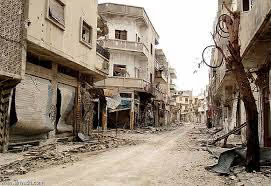
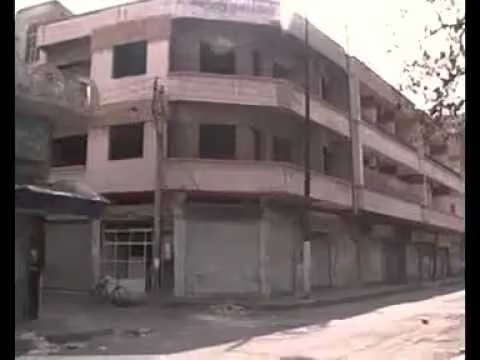
For the Old City and its three adjacent neighbourhoods taken together, UN-Habitat estimated in 2014 that of 151,000 residential and commercial units, 37,700 had been heavily damaged or destroyed and a further 66,500 partially damaged. The same 2014 profile notes that, while the neighbourhoods it surveyed were found non-functional overall, parts of Bab al-Siba'a remained functional, the damage there falling unevenly and dividing the neighbourhood into working and non-working areas. UN-Habitat's Homs city profile of May 2014 likewise records an abandoned street in Bab al-Siba'a where the physical damage was relatively limited in scale.
On recovery, the 2014 city profile already identified Bab al-Siba'a, alongside al-Hamidiyah, as a neighbourhood where population return was more significant and where emergency medical services should be provided first. At city scale, UNDP's REVIVE project is clearing 570,000 tonnes of debris across Aleppo, Deir ez-Zor, Homs and Rural Damascus while rehabilitating roads and water and sewage networks — a target still in progress; more than 1,300 people have so far taken part in its cash-for-work activities, supporting over 6,000 family members (UN News, August 2026). No recovery programme documented specifically for Bab al-Siba'a was found.
.svg)

.png)