
.avif)
Find & Read
No items found.


.svg)
Bio
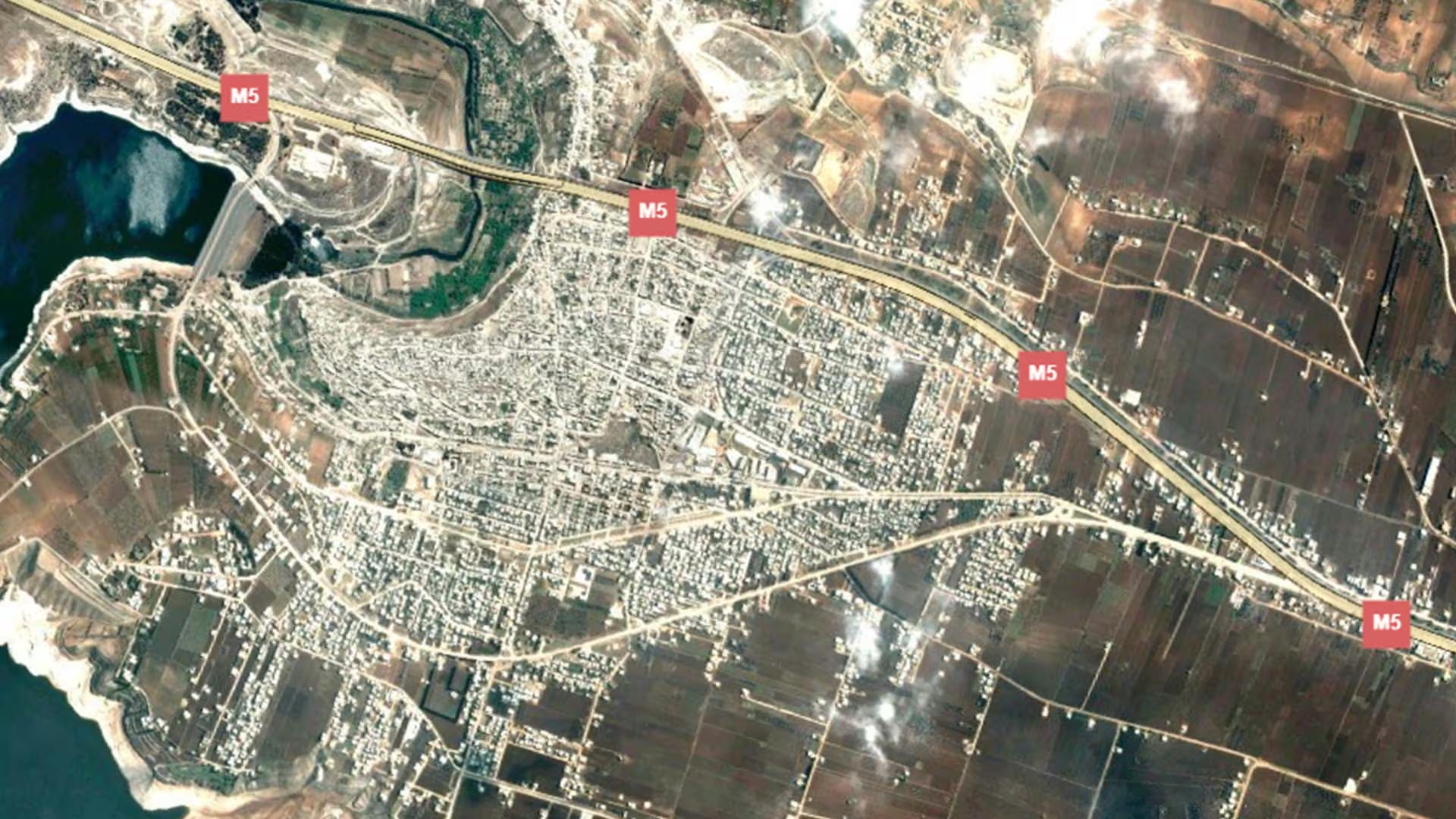
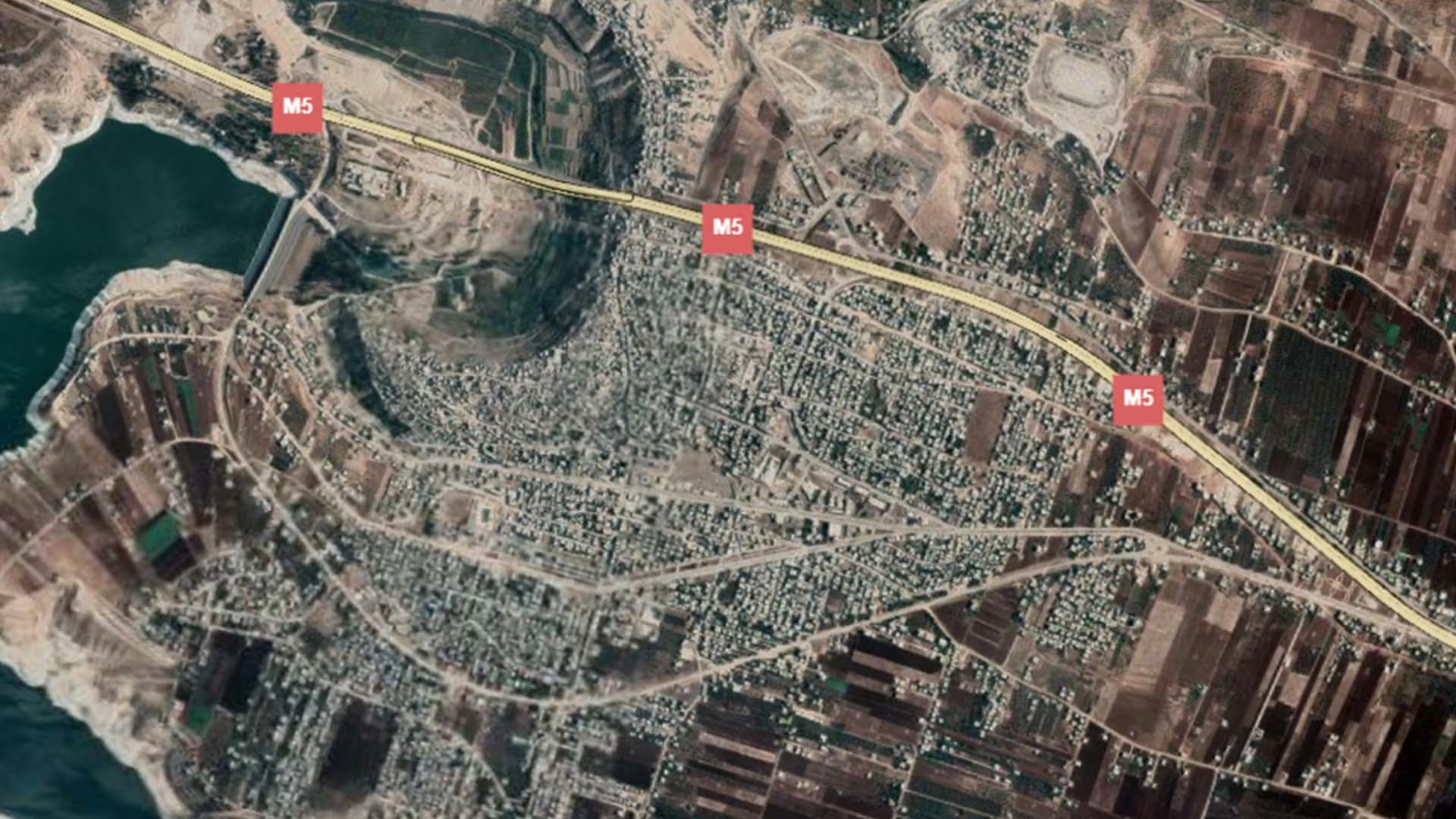
Al-Rastan lies in Homs Governorate on the banks of the Orontes, on the corridor that links the cities of Homs and Hama. Its economy rests on irrigated farming: the FAO's 2023 study of the Al-Rastan irrigation network describes the town as known for its fertile soil, with most of its inhabitants relying on agriculture as their main source of livelihood, growing grains, vegetables and fruit trees such as citrus and almond.
Two assets give the town weight beyond its size. The Al-Rastan dam on the Orontes feeds the Homs–Hama irrigation network, whose primary canal runs 68 km across the two governorates and is designed to irrigate about 20,695 hectares, two-thirds of them in Homs (FAO, 2023); within the Al-Rastan area alone the network is designed to supply water to about 11,000 hectares of farmland. The town is also the site of the Al-Zara thermal power plant, which the World Bank's Joint Damage Assessment of Selected Cities (2023) recorded as undamaged and estimated to provide 40 percent of the country's electricity.
Damages
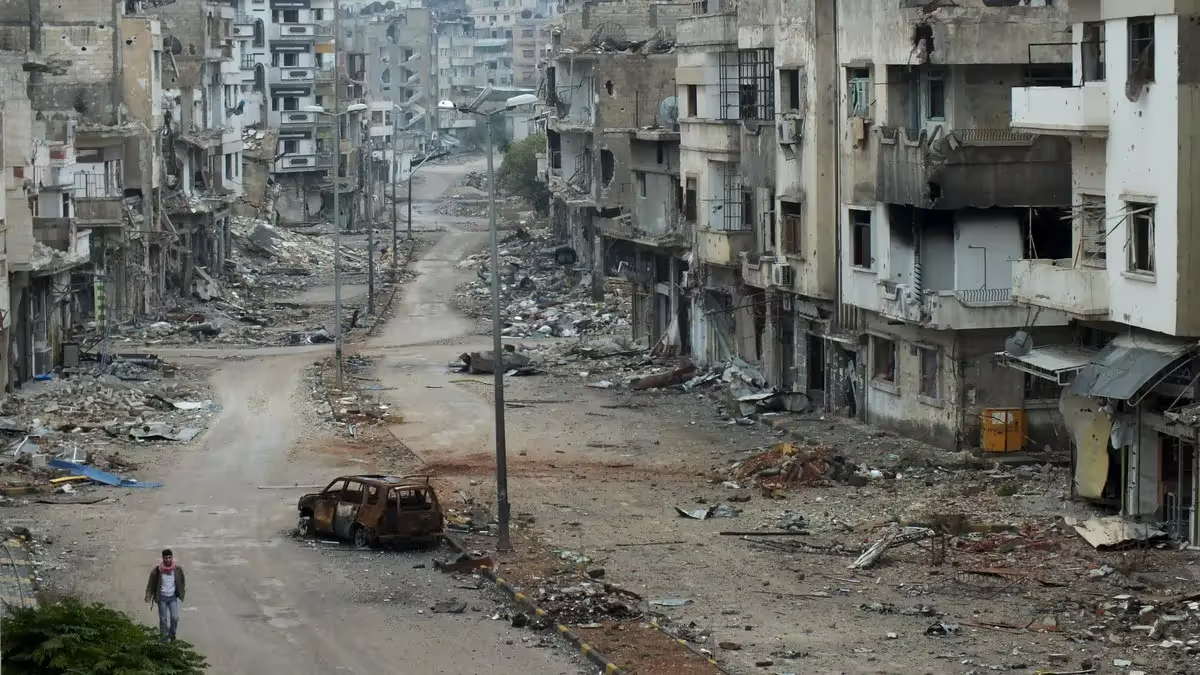
The World Bank's Joint Damage Assessment of Selected Cities, published in 2023 and covering the period since 2011, is the first in its series to include Rastan among its fourteen cities. It puts the total recorded damage in the town at between US$21.4 million and US$27.5 million across eleven sectors, of which housing accounts for US$5–6 million.
Service infrastructure is documented unevenly. In education, the assessment examined 15 facilities in Rastan: four were partially damaged and 11 undamaged, and those 11 are functioning — 73 percent of the total — while the status of four is unknown. In health, two of six facilities were damaged and either not functioning or only partially functioning, leaving no confirmed functioning hospital in the town at the time of the assessment; health-sector damage was costed at US$14.5–17.8 million. Damage to water infrastructure was put at US$1.4–2.6 million, with pumping stations in Rastan among those recorded as destroyed or partially damaged across the assessed cities, and damage to cultural heritage assets at US$0.28–0.48 million. The town's electricity infrastructure was recorded as undamaged.
The clearest documented recovery is agricultural. FAO's 2023 capitalisation study of the rehabilitated Al-Rastan irrigation network, carried out under the EU-funded smallholder support programme, found that restoring access to irrigation water for about 11,000 hectares of irrigable land lifted the summer cultivated area from about 687 hectares in 2018 to about 5,180 hectares in 2021, while winter crops rose from 1,962 hectares in 2018 to 5,713 hectares in 2021 — almost the same as in 2010. The same study recorded 4,108 households, about 24,650 people, returning to the target area after the rehabilitation, and six water user associations established to manage distribution.
.svg)

.png)


