.avif)
Find & Read
No items found.


.svg)
Bio
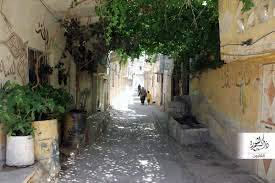
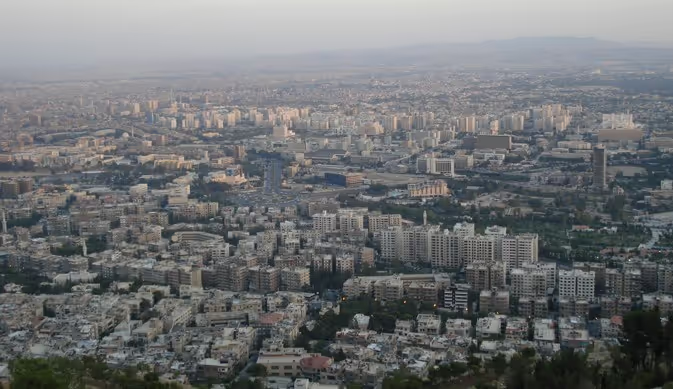
Al-Qaboun is a neighbourhood in the eastern part of Damascus city, adjoining Barza al-Balad and Tishreen. It sits inside Damascus Governorate, which OCHA's Damascus Governorate Profile (June 2026) describes as the political, administrative and economic centre of the Syrian Arab Republic: an area of 117 km², administratively divided into 16 municipalities, hosting the country's principal government institutions, markets, universities, hospitals and transport hubs. The same profile puts the population of Damascus at nearly two million people as of August 2025, a figure that includes a significant number of displaced residents. No separate population figure for Al-Qaboun itself appears in the institutional sources consulted here.
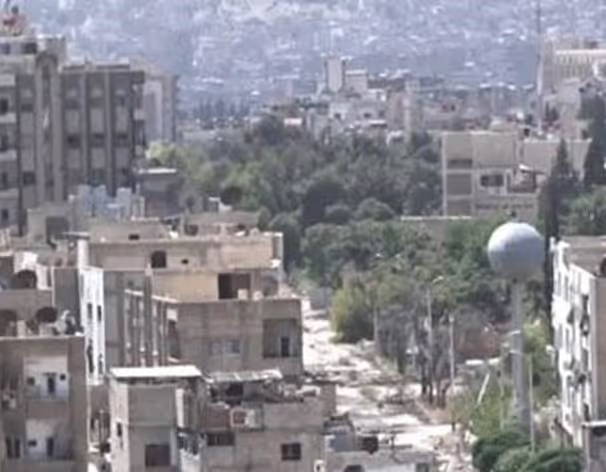
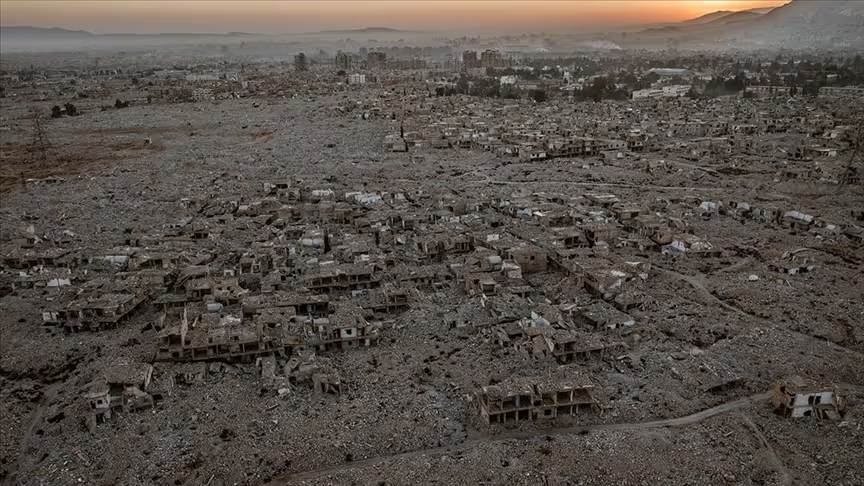
What sets the neighbourhood apart is its standing in the capital's recovery agenda. OCHA's June 2026 profile names Al-Qaboun as one of five Damascus neighbourhoods — alongside Yarmouk, Barza, Qadam and Tadamoun — that were heavily affected and that "continue to face significant recovery and rehabilitation needs", while the rest of the capital saw comparatively lower levels of direct damage. The same profile records that Damascus has been one of the leading destinations for refugee returns since December 2024, and that these return movements continue to add pressure on services and infrastructure — pressure felt most sharply in precisely such neighbourhoods.
Damages
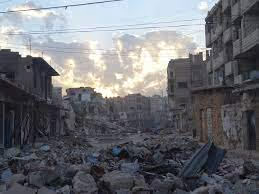
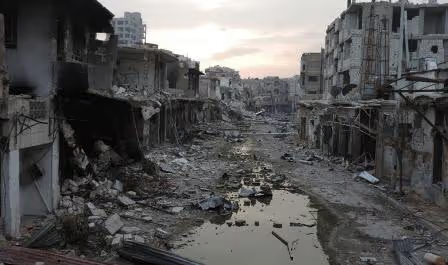
The most specific measurement available for Al-Qaboun comes from REACH's Humanitarian Situation Overview in Syria (HSOS): Damascus Governorate for December 2017. Key informants in the neighbourhood reported that between 76 and 100 per cent of buildings in Al-Qaboun were damaged — the highest band in the assessment's scale, and one recorded for only one other assessed location in the governorate that month. The same assessment found that just 1 to 25 per cent of the neighbourhood's original population remained present in December 2017, and that residents who did remain were most commonly living in independent apartments or houses.
REACH's separate Community Profile Update: Qaboun for the same month adds detail on services. It records that there were no functioning educational facilities in Al-Qaboun at any level, and that children were attending schools in neighbouring areas instead. It also notes that the electricity and water networks in the neighbourhood remained stable and adequate to meet the needs of the population then present, and that the availability of food, fuel, hygiene and medical items increased that month as commercial vehicle movement improved — with medical care inside the neighbourhood provided by doctors and nurses of the Syrian Arab Red Crescent.
No project-level recovery activity specific to Al-Qaboun appears in the institutional record consulted for this profile, and no updated building-damage figure for the neighbourhood has been published since 2017. What is documented is the neighbourhood's continuing place on the recovery agenda: OCHA's June 2026 governorate profile still lists Al-Qaboun among the Damascus neighbourhoods with significant recovery and rehabilitation needs, set against a governorate that has become one of the country's principal destinations for returns since December 2024.
.svg)

.png)