
.avif)
Find & Read
No items found.



Bio
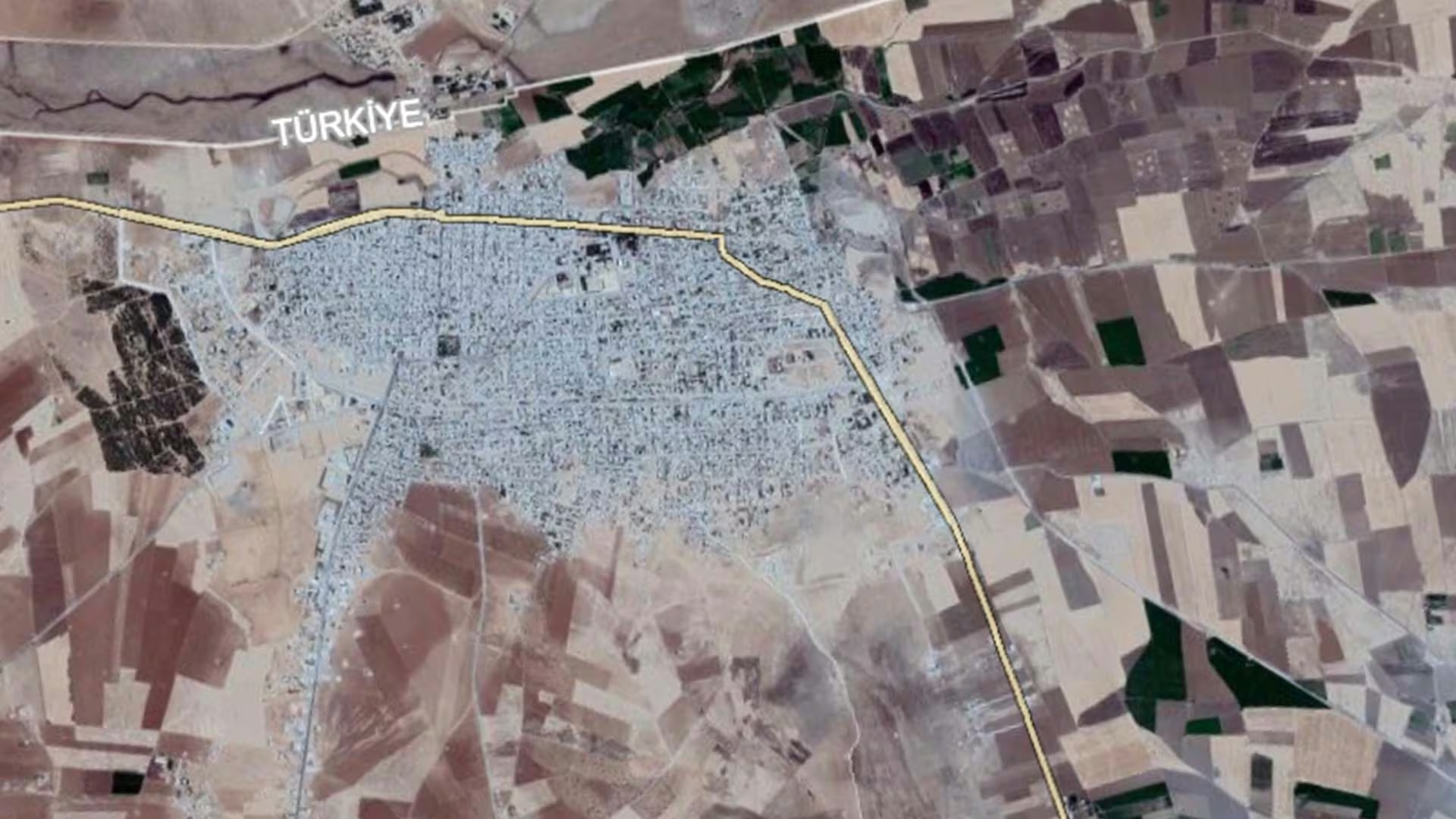
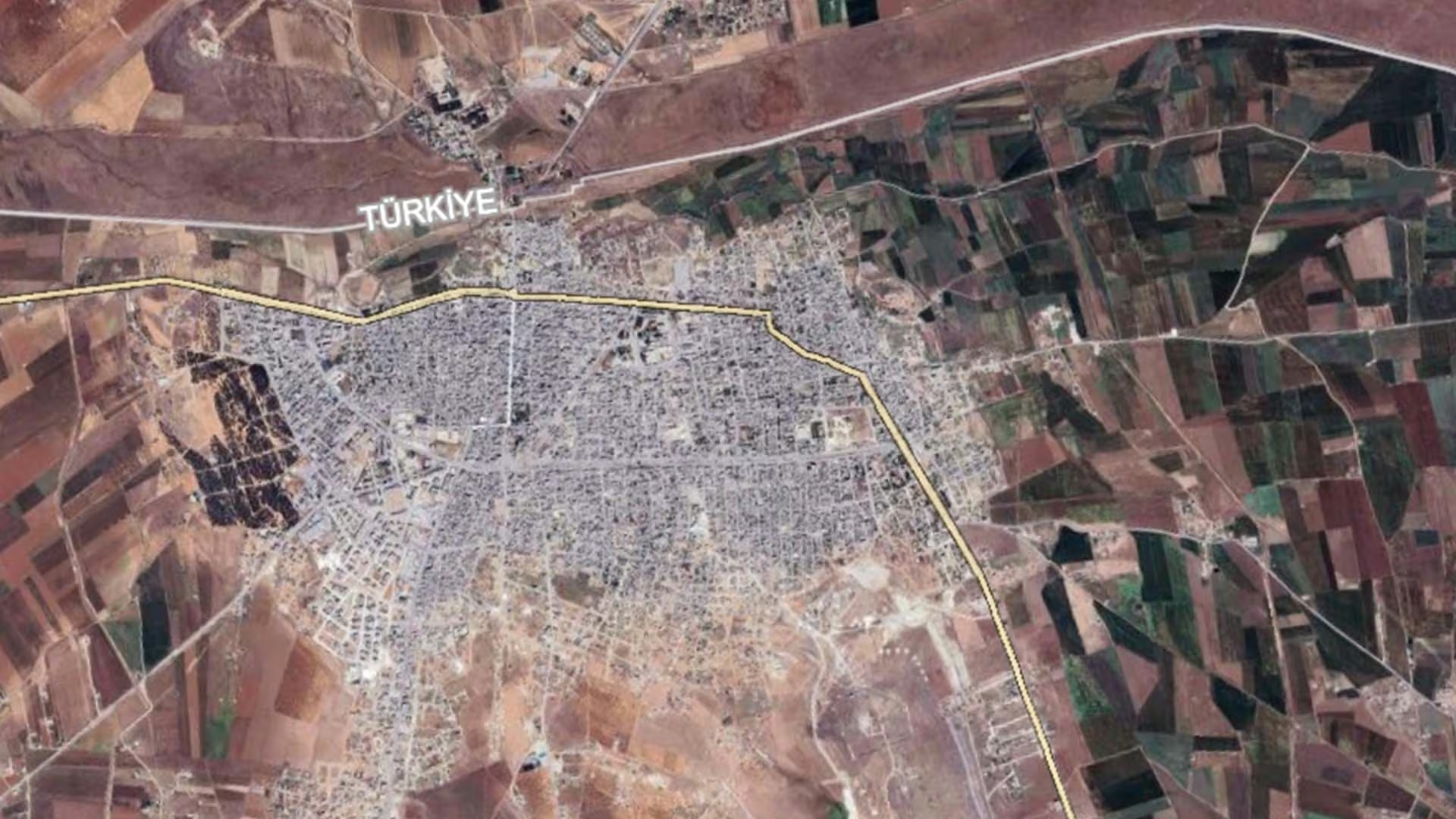
Ain al-Arab, also known as Kobani, lies in the north-east of Aleppo Governorate on Syria's northern border and serves as the administrative centre of the district that bears its name. The city stands beside the Ain al-Arab junction on the M4 international highway, with a border crossing to its north, which together give it a transit role for northern and eastern Syria. OCHA recorded that junction in January 2026 among the designated routes used to move relief consignments into the region.
The city's electricity and water supply depend on the Tishreen Dam on the Euphrates to its south: UNICEF reported on 29 December 2024 that after the dam became non-operational on 10 December, 413,000 people in Menbij and Kobani were left without water and electricity. For work inside the city itself, the most detailed publicly available spatial baseline remains the reference map published by REACH in October 2021, which sets out the neighbourhoods, administrative boundaries and facilities of Ain al-Arab city.
Damages
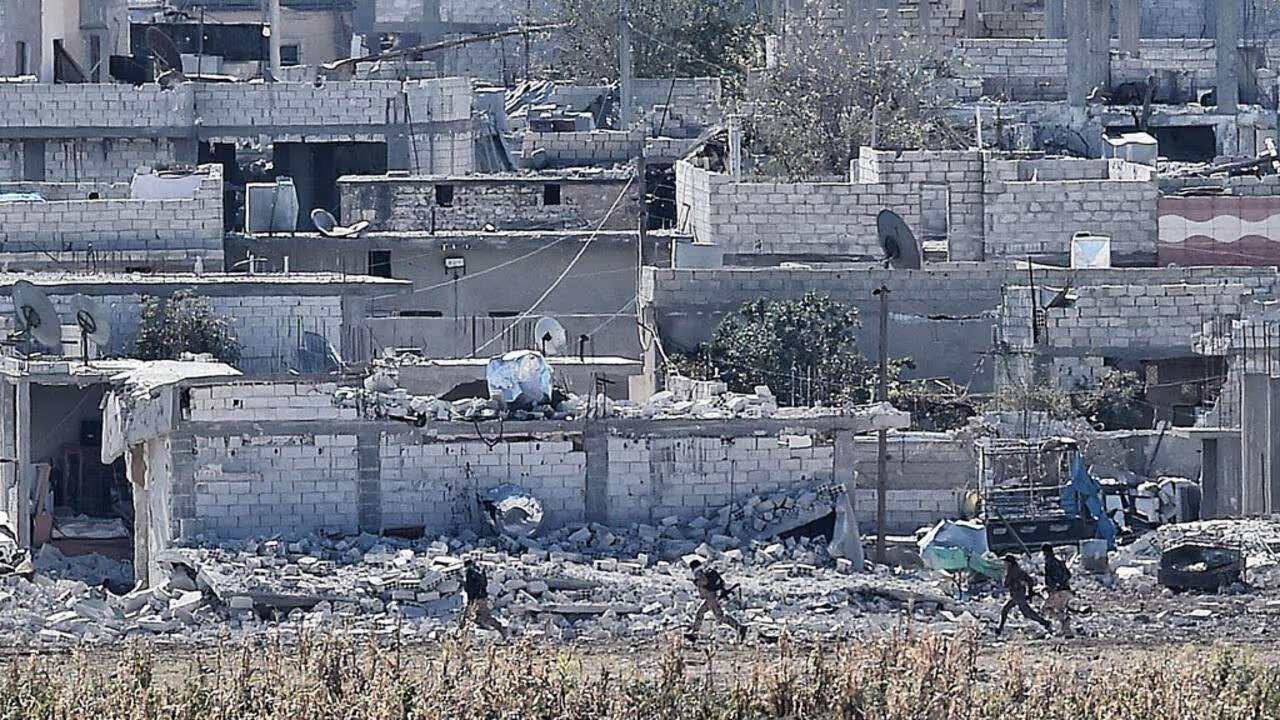
The earliest institutional record of physical damage to the city comes from UNITAR-UNOSAT, which analysed GeoEye-1 satellite imagery of 15 October 2014 at 50 cm resolution against imagery of 6 September 2014. UNOSAT described widespread damage across the city and numerous destroyed and severely damaged structures. The assessment is descriptive rather than numerical, and UNOSAT notes in the report itself that its analysis is not comprehensive, because the imagery used carried significant cloud cover.
No institutional count of damaged or destroyed buildings in Ain al-Arab has been published since — neither a building tally nor a damage percentage from UNOSAT, UN-Habitat or the World Bank — and this profile therefore carries no damage figure. On the services side, OCHA reported on 3 February 2026 that population movements had increased pressure on temporary collective shelters in Ain al-Arab, and, for Aleppo and the north-eastern governorates as a whole, that explosive ordnance contamination continued to restrict safe movement and delay returns.
Recovery work is documented. Between 25 and 27 January 2026, OCHA facilitated two inter-agency convoys to Ain al-Arab, of 24 trucks and five trucks respectively, carrying food, medicine, nutrition supplies, non-food items, health and WASH supplies, winterisation support, protection items, and fuel to support the restoration of water supply systems; they passed through the humanitarian corridor at the Ain al-Arab junction on the M4. OCHA reported on 3 February 2026 that mine action activities — survey, clearance and risk education — were due to resume, a precondition for returns and for construction work. UNICEF stated on 5 January 2025 that it was supporting the re-operationalisation of the Tishreen Dam, an effort aimed at securing continuous electricity and water for nearly 850,000 people in Aleppo, Manbij and Serrin, the last of which lies within Ain al-Arab district; this is the stated aim of ongoing work rather than a completed result.
.svg)
.svg)

.png)


